What CoinFlip actually is — and what it isn't
CoinFlip is a Chicago-based fintech (legal name GPD Holdings LLC, founded in 2015 by Daniel Polotsky) that operates one of the world's largest networks of bitcoin ATMs — physical kiosks where you feed in cash and receive cryptocurrency in your own wallet minutes later. It landed in New Zealand in September 2023, hit 100 kiosks by June 2024, and at the time of writing the official locator lists 132 machines across the country, from dairies in Northland to petrol stations in Southland.
Alongside the machines, CoinFlip ships a self-custody wallet app (rolled out to Australia and New Zealand in November 2024), an OTC trading desk for large orders, and 24/7 human support — a rarity in this industry. Those are the facts, sourced from coinflip.tech and the company's own announcements.
Now the part the brochures skip: convenience is the product, and you pay heavily for it. A cash kiosk charges a service markup that independent reviewers consistently measure in the high single digits to low twenties of percent. That's not a scam — it's the economics of armoured cash logistics, mall rent and compliance — but it means a CoinFlip ATM is the right tool for a specific job, not an everyday exchange. This guide exists to help you decide which job is yours.
Auditor's note02 — MechanicsWe are an independent editorial project. We don't operate ATMs, we hold no CoinFlip inventory, and this is not the official CoinFlip website. Where we state exact figures — fees, limits, kiosk counts — they come from the official coinflip.tech site or named third-party sources, checked on the date shown in the byline. Numbers in this industry rot fast; always re-verify on the machine screen before you press confirm.
How a CoinFlip bitcoin ATM works in New Zealand
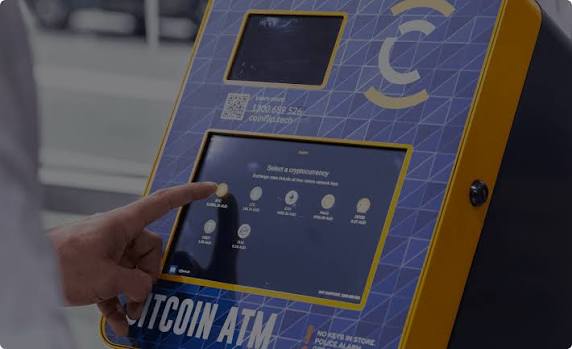
If you've never used a crypto kiosk, the process is closer to a vending machine than a bank ATM. There's no card slot in the traditional sense and — critically — no account holding your coins afterwards. The machine sends crypto straight to a wallet address you control. Here's the buy flow as it runs on NZ machines:
- Get a wallet before you leave home. The machine needs a destination address. That can be the CoinFlip Wallet, or any wallet showing a QR code for the asset you're buying. Setting up a wallet at the kiosk while a queue forms behind you is how mistakes happen.
- Verify your identity on screen. First-time users enter name, date of birth and an NZ mobile number, then confirm an SMS code. Small purchases stop there; bigger amounts step up to photo ID. Full tier details are in our registration and login guide.
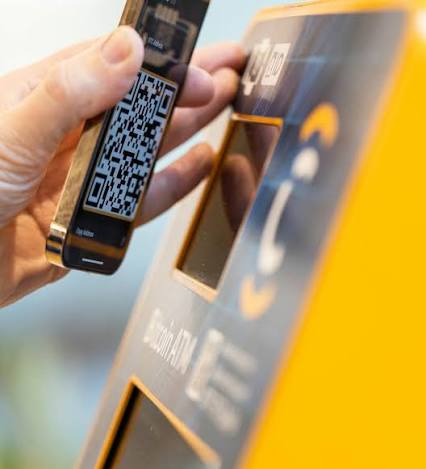
- Pick your coin and scan your QR. Select Bitcoin (or ETH, LTC, USDC where listed), then hold your wallet's receive QR up to the scanner. Triple-check the asset matches the address — sending BTC to an ETH address burns the money with no undo button.
- Feed in NZD notes. The machine totals as you insert. Minimum first transaction is NZ$20 per the official FAQ. The screen shows the exchange rate including CoinFlip's markup — read it before confirming; that number is the honest price.
- Confirm and keep the receipt. The machine broadcasts the transaction. Small amounts often arrive within minutes; during network congestion it can take longer. The receipt carries the transaction ID — your only proof if support needs to trace anything.
Selling works in reverse on cash-dispensing machines: you request a cash amount, the kiosk shows a deposit address, you send crypto from your wallet, and once the blockchain confirms, the machine pays out NZD notes. Fewer kiosks support selling than buying, so check the location listing before making a trip.
Where to buy crypto in NZ: kiosk, exchange, or P2P
"Where should I buy crypto in New Zealand?" has three honest answers, and the right one depends on what you're holding (cash or bank money), how fast you need it, and how much fee pain you'll tolerate. Here's the field comparison we wish someone had shown us in 2017:
| Channel | Typical all-in cost | Speed | KYC | Best for |
|---|---|---|---|---|
| CoinFlip bitcoin ATM | ≈8–20%+ (markup + flat fee + network fee) | Minutes | Phone number → photo ID as amounts grow | Converting physical cash instantly; no bank involved |
| Online exchange (regulated) | ≈0.2–4% | Minutes–hours (instant with card) | Full ID upfront | Most people, most of the time — best rates by far |
| NZ retail brokers | ≈1–3% + spread | Minutes–1 day (bank transfer) | Full ID upfront | NZD bank deposits, local support |
| P2P marketplaces | 0–5% (price spread) | Varies | Varies by counterparty | Experienced users; higher fraud risk |
The pattern is blunt: kiosks trade money for speed and cash-compatibility; exchanges trade paperwork for price. If your funds are already in a bank account, routing them through a cash machine makes no financial sense — withdraw fees, then ATM markup, then network fee stack into a double-digit haircut. If you're holding physical notes and want bitcoin before your coffee cools, the kiosk is genuinely unmatched.
04 — The billWhat it really costs: the fee reality check
CoinFlip markets itself on "low rates" relative to other ATM operators, and within the kiosk industry that holds up — competitors routinely charge more. But "cheap for an ATM" and "cheap" are different claims. Three separate charges stack on every kiosk purchase:
- Service markup — the exchange rate on screen sits above the market index price. Historic US disclosures put CoinFlip buys around 6.99–8.99% over the index; independent 2026 reviews measure a wider 7–22% range across locations and assets.
- Flat transaction fee — a fixed few dollars per trade, which hits small purchases hardest. On a NZ$50 buy, a ~$5 flat fee is 10% before the markup even starts.
- Network fee — the blockchain miner fee, passed through at cost or with a floor, rising when the network is busy.
We've built two full teardowns: CoinFlip fees explained (the whole ecosystem — ATM, wallet, spreads) and ATM charges with worked NZD examples showing exactly how much bitcoin NZ$100 buys after every deduction. Read those before your first visit; the difference between an informed and uninformed kiosk user is routinely 5%+ per transaction.
05 — The softwareThe CoinFlip Wallet app in sixty seconds
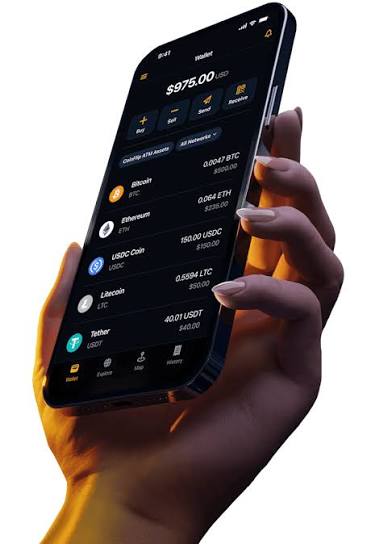
In November 2024 CoinFlip brought its self-custody wallet app to New Zealand and Australia — the successor to its earlier Olliv platform. Self-custody is the load-bearing term: the keys live on your phone, not on CoinFlip's servers. That's the same custody model as MetaMask or Trust Wallet, and the opposite of leaving coins on an exchange. If you lose your recovery phrase, no support line on Earth can reset it — which is both the feature and the risk.
The app bundles buy/sell/send/receive/swap for core assets (BTC, ETH, USDC, LTC, USDT), a live map of every NZ kiosk, and 24/7 in-app support. It's the natural companion if you use the machines — receipts, addresses and support in one place. We've audited it from both angles: the wallet's custody model and security and the app itself — setup, features, and what we'd change.
The 2026 question: is New Zealand banning crypto ATMs?
This is the story every NZ kiosk user should be tracking. In July 2025, Associate Justice Minister Nicole McKee announced an in-principle decision to prohibit crypto ATMs as part of a sweeping overhaul of the Anti-Money Laundering and Countering Financing of Terrorism Act 2009, citing their use by criminal networks to move cash offshore fast. The same package proposed a NZ$5,000 cap on international cash transfers.
Here's the nuance the headlines flattened: as of mid-2026, no ban is in force. The in-principle decision still has to survive Cabinet, drafting and a parliamentary timetable, and industry submissions have pushed alternatives — transaction caps, enhanced monitoring, licensing — that would keep compliant operators alive. CoinFlip continues to operate its full NZ fleet and has publicly positioned itself as a compliance-forward operator (registered on the Financial Service Providers Register, supervised by the Department of Internal Affairs under the AML/CFT Act).
Risk warning07 — Street smartsRegulatory risk is real risk. If kiosks are banned or capped, cash-to-crypto in NZ gets materially harder — but your coins are safe either way if they're in your own wallet. Machines send crypto to addresses you control; a banned operator can't confiscate what it never held. One more argument for self-custody, properly backed up.
The safety audit: scams that use bitcoin ATMs
The single biggest danger at a bitcoin ATM isn't the operator — it's the person on the phone telling you to go there. Police and Netsafe NZ report a persistent pattern: scammers impersonating IRD, banks, police or "your grandson in trouble" pressure victims into feeding cash into crypto kiosks, because the transfer is irreversible. Kiosk operators post warnings on-screen; scammers coach victims to click through them.
- Nobody legitimate ever demands payment via bitcoin ATM. Not IRD, not your bank, not police, not a courier company. This rule has no exceptions.
- Only send to a wallet you created yourself, on your own device, holding the recovery phrase yourself. A QR code sent to you by someone else is their wallet, not yours.
- "Refundable safety deposit" is a contradiction. Crypto transactions cannot be reversed. Anyone claiming otherwise is lying by definition.
- Romance and "investment mentor" pipelines end at kiosks. If an online relationship or a WhatsApp trading group is directing you to a machine, you are the exit liquidity.
If you've already been coached into a payment, keep the receipt, report to police and NZ CERT immediately, and call CoinFlip's 24/7 line — funds usually can't be recalled, but rapid reports have frozen downstream accounts and help investigations.
08 — VerdictOur verdict: who should use CoinFlip NZ
✔ Use a CoinFlip ATM if
- You hold physical cash and want crypto in minutes
- You value face-of-a-machine simplicity over price
- You're making small, occasional purchases
- You want 24/7 human support behind the hardware
✘ Use an online exchange if
- Your money is already in a bank account
- You're buying more than a few hundred dollars
- You buy regularly (fees compound brutally)
- You want limit orders, more assets, lower spreads
CoinFlip runs a legitimate, compliance-heavy operation with the best support culture in the kiosk industry — and a price structure that only makes sense for cash-first, speed-first use cases. Know which user you are before you feed the machine. Start with the location map if that's you; start with the button below if it isn't.
Frequently asked questions
Is CoinFlip legal in New Zealand?
Yes. As of July 2026, crypto ATMs operate legally in New Zealand. Operators must register on the Financial Service Providers Register and comply with the AML/CFT Act 2009, supervised by the Department of Internal Affairs. Note that in July 2025 the Government announced an in-principle decision to ban crypto ATMs as part of an AML/CFT overhaul — the final decision is still working through Cabinet, so check the latest status before relying on kiosks long-term.
How much does a CoinFlip ATM charge in NZ?
CoinFlip does not publish a flat NZ price list. Independent audits of its fee structure put buy-side service markups roughly between 7% and 22% above the spot index price depending on location and asset, plus a flat per-transaction fee and a network (miner) fee. That is typical for the ATM industry — and far more than online exchanges charge. See our dedicated fees breakdown for worked NZD examples.
Do I need ID to use a CoinFlip bitcoin ATM in NZ?
For small purchases you typically register with your name, date of birth and a mobile number that receives an SMS code. Larger amounts trigger progressively stricter verification — government photo ID scan and, at the top tier, enhanced identity checks — because New Zealand AML/CFT rules require it. There is no fully anonymous tier.
What cryptocurrencies can I buy at a CoinFlip ATM?
Bitcoin (BTC) is the flagship, and machines also list major assets such as Ethereum (ETH), Litecoin (LTC) and USDC — availability varies by kiosk and is shown on the machine screen. The companion CoinFlip Crypto Wallet app supports the same core assets.
Is it cheaper to buy crypto online or at a bitcoin ATM in NZ?
Online, almost always — and by a wide margin. A regulated online exchange typically charges 0.2%–4% all-in, versus roughly 8%–20%+ effective cost at a cash kiosk. ATMs win only when you specifically need to convert physical cash instantly without a bank account in the loop.
Does CoinFlip have an app in New Zealand?
Yes. CoinFlip launched its self-custody CoinFlip Crypto Wallet app in Australia and New Zealand in November 2024. It stores keys on your device, integrates the ATM location map, and lets you buy, sell, send, receive and swap supported assets.
Can I sell bitcoin for cash at a CoinFlip ATM in NZ?
Selected machines support sell (cash-out) transactions: you send BTC to a displayed address and the machine dispenses NZD once the transaction confirms. Not every kiosk holds cash, so check the location page or call support before travelling. Sell-side spreads are typically 4%–5% below spot.